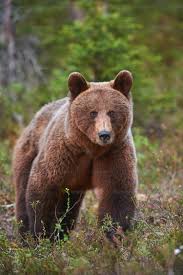
Read the facts about bears below :
1. Massive Land Mammals: Bears hold the undisputed title of being some of the largest terrestrial carnivorans on Earth. An adult male polar bear or Kodiak bear can reach a massive weight of up to 800 kg, making it a truly formidable presence in its natural habitat. This immense body mass is supported by a dense skeletal structure and heavy muscle layers that provide incredible strength. Their large physical size allows them to overpower large prey animals and defend their resources against any rival. However, this heavy build varies across different ecosystems, with sun bears being notably smaller than northern ones. Sadly, maintaining such massive bodies requires vast amounts of territory and substantial populations of food resources. As ecosystems shrink due to human encroachment, these majestic giants struggle more and more to find the space and resources necessary to support their large physical frames.
2. Exceptionally Good Swimmers: Unlike many land mammals, bears absolutely love the water and are exceptionally strong swimmers, especially polar bears. They routinely bathe in rivers, lakes, and oceans to cool down during the day or travel between ice floes. It is not uncommon to see a bear wading deep into water bodies, keeping only its head exposed while soaking its body for hours. Their powerful limbs and wide paws make them highly efficient in the aquatic environment, allowing them to cross wide bays effortlessly. They have been recorded swimming across open waters that span several kilometers in width to patrol their territories or search for food. Furthermore, brown bears will actively pursue spawning salmon in the water, turning a rushing river into a primary feeding station. This unique reliance on aquatic habitats highlights how deeply connected they are to healthy, water-rich systems across the globe.
3. Impressive Running Speeds: Despite their massive weight and muscular build, bears are capable of unleashing incredible short bursts of speed reaching up to 56 km/h. This rapid acceleration is essential because they do not possess the anatomy for long-distance endurance chases over open plains. Instead, they rely on heavy muscle fibers in their powerful legs to launch explosive charges from close proximity to their targets. Their heavy paws grip the earth firmly, providing maximum traction as they propel their massive bodies forward during a charge. This sprinting capability is usually limited to short distances before the animal tires out due to heat accumulation. If the initial rush fails to secure the prey or deter the threat, the bear will typically abandon the chase to conserve vital energy. The combination of unpredictable stalking and sudden, terrifying speed makes them highly efficient when conditions are just right.
4. Unique Biological Identifiers: The distinct facial structure and nose prints found on a bear function exactly like a human fingerprint because no two individuals share the same design. These facial features, wrinkle patterns, and claw configurations vary across the animal's body. Interestingly, these distinct characteristics help researchers track specific bears in the wild over long periods. This means that even from a distance, experienced biological observers can identify individual bears by their unique physical silhouettes and scarring patterns. The primary purpose of their thick coat color variations is camouflage, which breaks up the animal's silhouette against natural backgrounds. In the dappled light of dense forests, snow-covered tundras, and moving shadows, these coats render the massive mammal almost completely invisible to unsuspecting prey or observers. This evolutionary design is a masterpiece of natural camouflage that allows them to blend flawlessly into their native ecosystems.
5. Diverse Species: The bear family is divided into eight distinct species, each uniquely adapted to the specific environmental pressures of its geographic region. The American black bear is the most numerous variety, primarily roaming the diverse forested landscapes of North America. In contrast, the polar bear is built for extreme arctic cold, sporting a thick layer of blubber and a white coat to survive freezing northern winters. The sun bear is the smallest surviving species, possessing short fur and a small frame ideal for navigating the dense, tropical jungles of Southeast Asia. Other recognized varieties include the spectacled bear of South America and the giant panda, which is unfortunately threatened by habitat fragmentation. Each of these species represents a critical branch of evolutionary history that faces distinct conservation challenges in the modern era. Protecting this genetic diversity requires international cooperation and customized conservation strategies tailored to each region's specific socio-economic realities.
6. Communication Via Posture: Bears utilize a sophisticated system of visual and vocal communication, and their body language plays a vital role in conveying messages to their cubs and rivals. If you look closely at a mother bear leading her cubs through dense brush, you will notice prominent behavioral cues and vocal huffs. These distinct actions are often referred to as warning signs and serve a highly functional purpose in the wild. When a mother bear senses danger while leading her cubs through dense brush, she will stand on her hind legs or sound a sharp huff. The young cubs, walking closely behind her, immediately spot these highly visible signals and know exactly how to react to the warning. Depending on the mother's posture, the cubs understand whether they need to climb a tree, freeze in the undergrowth, or follow her closely. This silent, visual language allows the family group to stay coordinated without making loud sounds that could alert dangerous predators.
7. Incredible Climbing Power: The physical agility of a bear is truly astounding, particularly when it comes to their vertical climbing and upper body capabilities. Thanks to highly developed muscle structures in their forelimbs and sharp claws, bears can scale tall trees straight up into the canopy. This extraordinary vertical ability allows them to snatch honeycombs out of trees or seek refuge on high branches away from ground threats. Horizontally, they can cover rugged mountain slopes at a rapid pace, allowing them to close gaps instantly. This climbing ability is heavily utilized during foraging, enabling them to leap across boulder fields or rushing streams to surprise their targets. It also serves as a critical defense mechanism for cubs, allowing them to escape danger or navigate highly rugged, broken terrain effortlessly. The sheer power generated by their shoulders ensures that very few natural obstacles can successfully hinder a bear's movement.
8. A Terrifyingly Mighty Sound: The roar or vocal huff of an adult bear is one of the most terrifying and powerful sounds in the entire animal kingdom. Produced by a specialized vocal tract, this deep, resonant sound can travel through dense forest canopies over a significant distance. Bears use this booming vocalization to proclaim their dominance, warn off potential intruders, and locate distant mates during breeding seasons. The sound waves generated are so intense that they can communicate stress, anger, or territorial warnings instantly to nearby animals. This vocalization can penetrate solid objects like thick vegetation and can actually cause rivals to retreat before a physical fight occurs. When a large bear vocalizes in close proximity, the acoustic vibration is felt physically by anyone standing nearby. This vocal power establishes their dominance over the landscape without the immediate need for physical combat with rival bears.
9. Massive Dietary Capacity: As omnivores with exceptionally high seasonal energy requirements, bears possess a truly massive dietary capacity when food is readily available. A hungry bear can consume an astonishing 40 kg of food in a single day during hyperphagia as it prepares for winter torpor. This binge-eating behavior is an evolutionary adaptation to the seasonal nature of foraging in wild environments, where food abundance shifts rapidly. After consuming such a massive meal, a bear will often spend hours resting near its primary foraging site to conserve energy. They will actively defend their feeding spots from scavengers like wolves or other sub-adult bears. The bear will continue to return to this productive area to feed until the food source is completely depleted. This cycle of heavy feasting allows a bear to accumulate the thick fat layers necessary to sustain it through months of winter sleep.
10. Strictly Solitary Lifestyles: Unlike animals that live in highly social family groups or packs, bears are strictly solitary animals that prefer to live alone. Except for the mandatory bond between a mother and her growing cubs, adult bears spend the vast majority of their lives in isolation. They maintain expansive home ranges that they patrol regularly to ensure no other individuals of the same sex over-exploit resources. A single dominant male's territory is typically very large and will often overlap with the smaller territories of several adult females. They avoid accidental encounters with neighboring bears by reading scent signs left behind on rub trees along common pathways. When two adult males do happen to cross paths during the mating season, it can result in vicious, bloody conflicts over reproductive rights. This solitary nature requires them to be completely self-reliant, as an injury sustained during a fight can easily impair their ability to forage.
11. Masters of Foraging: Bears are apex omnivores that rely almost entirely on supreme patience and powerful tracking tactics rather than chasing down prey over massive distances. Their thick coats blend seamlessly into the shadows, allowing them to forage incredibly close to riverbanks and berry patches without being noticed. They will slowly wander through an area, moving with absolute determination through dense logs and brush to unearth roots or insects. Once they manage to locate a rich food source like a salmon run, they launch their fishing attempts. They use their immense weight to pin fish against rocks, knocking them out of the water and securing them with their jaws. A precise bite is then delivered to consume the high-fat skin and brains of the fish immediately. Because this process requires immense timing, young bears must spend years learning these hunting styles from their mothers.
12. Exceptional Scent Capabilities: Bears do the vast majority of their foraging using their nose because their nasal cavities are highly adapted to detecting distant odors. Their sense of smell is estimated to be seven times better than that of a bloodhound, giving them a massive advantage. This clarity is made possible by a specialized, highly convoluted structure inside the nasal passages that maximizes surface area. This biological structure acts like an internal radar, picking up scent molecules carried by the wind from kilometers away. It is also the reason why a bear can locate deeply buried carcasses or insects hidden inside rotting logs effortlessly. Foraging using this sensory advantage allows them to find hidden food resources under the cover of dense vegetation. Their sensitive snout also assists in the dark, gathering tactile and chemical information about the immediate surroundings as they move through brush.
13. Specialized Foraging Tongues: A look at a bear's tongue reveals a fascinating biological tool designed perfectly for an omnivorous diet. These muscular structures give the tongue an incredibly flexible texture, closely resembling an efficient tool for gathering small items. This design serves a vital purpose during feeding, allowing the bear to strip berries directly away from thorny bushes without getting injured. By licking a honeycomb repeatedly, the long tongue can extract every single shred of honey, ensuring nothing goes to waste. It is said that a bear can easily pick out individual insects from narrow crevices with a few strokes of its tongue. Additionally, this flexible tongue acts as a natural aid during grooming sessions, cleaning thick fur and removing debris from their coats. This specialized anatomy showcases how perfectly adapted every part of the bear's body is for a highly opportunistic lifestyle.
14. Vulnerable Cub Development: Bear cubs enter the world in an incredibly vulnerable state, being born completely blind, hairless, and entirely dependent on their mothers. A typical litter consists of two to three cubs, born during the mother's winter sleep inside a well-hidden den site like a cave or hollow log. Because they cannot see or walk for the first months of life, they rely entirely on warmth and nurse constantly. The mother bear must remain highly vigilant, staying inside the den to nurse them while protecting them from freezing temperatures. Male bears play absolutely no role in raising offspring and may even kill cubs to force the female into estrus again. As a result, the mother must balance foraging for food in spring with guarding her vulnerable young from these internal threats. By the time they reach six months old, the cubs accompany her everywhere to learn survival skills.
15. Sophisticated Scent Marking: To maintain their solitary lifestyle without constant physical fighting, bears utilize a highly advanced system of chemical communication. They possess specialized scent glands located around their bodies, particularly on their paws and flanks. Bears will rub their backs, necks, and faces high up onto tree trunks along regular paths, leaving behind fur and secretions. This fluid carries a distinct chemical signature that informs other bears of the individual's identity, size, and reproductive status. They also use their heavy claws to leave deep scratch marks on tree bark, providing a permanent visual boundary marker that indicates their height. Neighboring bears carefully sniff these rub trees to determine exactly how recently the territory owner passed through the area. This chemical messaging system helps minimize direct confrontations, allowing individuals to share a landscape while maintaining peaceful boundaries.
16. The Truth About Spirit Bears: Contrary to popular belief, white spirit bears or Kermode bears are not a distinct species of bear, nor are they typical albinos. Instead, their striking white fur and dark eyes are caused by a rare genetic mutation known as a recessive allele at the MC1R gene. This condition suppresses the production of dark pigments in the fur while leaving the dark skin pads and eyes fully intact. In the wild, this mutation is incredibly rare, occurring primarily in specific island populations off the coast of British Columbia. Because a white coat provides unique visual blending against bright river backdrops, these individuals excel at catching fish during daylight hours. Almost all spirit bears seen today are fiercely protected by local indigenous communities and international conservation regulations. To maintain this striking look, protecting their pristine temperate rainforest habitat from industrial logging is absolutely critical.
17. Expressive Huffed Greetings: While bears are famous for their terrifying defensive pops and aggressive lunges, they also possess a remarkably communicative vocalization known as a "chuff." Also referred to as a huff, this sound is produced by expelling air sharply through the mouth and nostrils while keeping the jaw relaxed. It results in a low-frequency, stuttering puffing sound that is used primarily as an anxious, cautious greeting or warning signal. Bears will chuff at one another when a mother signals her cubs to retreat or when individuals cross paths unexpectedly. It serves to de-escalate tension between these powerful mammals, signaling that the individual is alert and acknowledging the other's presence. In research environments, bears will frequently chuff when startled by handlers as a sign of mild agitation. This soft vocalization offers a glimpse into the communicative, protective side of an otherwise fiercely independent and solitary mammal.
18. Sanctuaries Versus The Wild: One of the most heartbreaking paradoxes of modern bear conservation is that many bears live in substandard conditions rather than thriving in the wild. Experts estimate that there are vulnerable populations of specific bear species remaining across their fragmented global habitats. Meanwhile, in various commercial bile farms and roadside attractions globally, thousands of bears are kept in tiny cages for product extraction. Many of these captive animals live in substandard conditions, completely disconnected from any legitimate conservation programs or survival initiatives. Large-scale exploitation facilities in parts of Asia breed these animals like livestock to satisfy demand for traditional products. This surplus of mistreated bears does nothing to save the species, as these animals cannot be re-introduced into the wild. True conservation requires protecting the natural habitats where the remaining wild populations can hunt, breed, and roam freely.
19. Strong Paws For Digging and Power: The paws of a bear are magnificent examples of evolutionary engineering, designed perfectly to facilitate extensive digging and lethal force. The bottom of each paw features thick, tough, leathery pads that absorb shock and support the bear's immense weight. These fleshy pads spread out when compressed, distributing pressure so the mammal can walk across soft mud and snow without sinking deeply. This strong footfall is absolutely critical for an opportunistic forager that needs to flip heavy boulders or dig out deep roots. Inside these paws are non-retractable claws that measure up to ten centimeters in length, acting like heavy-duty spikes. The bear uses these claws constantly while walking, digging, and climbing, keeping them worn down but incredibly strong. When catching prey, the claws lock downward, acting like excavating hooks to grip and hold struggling animals securely.
20. Severe Conservation Threats: Bears are currently facing an unprecedented survival crisis, with several global populations listed as vulnerable or endangered on international watchlists. The primary driver of this decline is severe habitat destruction caused by logging, mining, and human settlement expansion. Bears have lost large portions of their historical range over the past century, forcing them into tiny islands of wilderness. This fragmentation leads to increased human-bear conflict, as hungry bears venture out of depleted forests into agricultural lands looking for food. Additionally, the rapid onset of climate change dramatically alters the availability of sea ice for polar bears and seasonal berry crops for brown bears. Every single species requires vast connected corridors to avoid genetic isolation and conflict with expanding towns. Without aggressive habitat protection and conflict mitigation efforts, we face the very real possibility of losing these magnificent mammals forever.