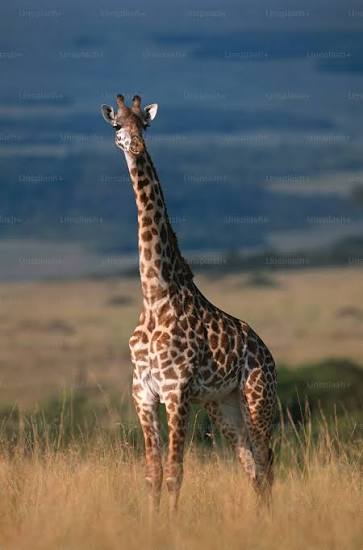
Read the facts about giraffes below :
1. The Tallest Land Mammals: Giraffes hold the undisputed title of being the tallest species among all land mammals on Earth. An adult male giraffe can reach a massive weight of up to 1,900 kg, making it a truly formidable presence in its natural habitat. This immense body mass is supported by a dense skeletal structure and heavy muscle layers that provide incredible strength. Their large physical size allows them to feed on tree canopies that are completely out of reach for other herbivores, including elephants and antelopes. However, this heavy build varies across different ecosystems, with different subspecies showing subtle size variations. Sadly, maintaining such massive bodies requires vast amounts of territory and substantial populations of healthy trees. As ecosystems shrink due to human encroachment, these majestic giants struggle more and more to find the space and resources necessary to support their large physical frames.
2. Exceptionally Long Tongues: Unlike many other browsing animals, giraffes absolutely rely on their specialized prehensile tongues, which can grow up to 53 centimeters long. They routinely use them to wrap around branches, strip leaves, and navigate around sharp spikes on acacia trees. It is not uncommon to see a giraffe extending its dark, purplish-black tongue high into tree crowns, protecting it from getting sunburned during the intense heat of the day. Their powerful lips and flexible tongues make them highly efficient in the savanna environment, allowing them to extract nutrients effortlessly. They have been recorded browsing from trees that span several meters in height to maintain their massive caloric intake. Furthermore, giraffes will actively select the most nutrient-rich leaves, turning a challenging feeding environment into an abundant source of sustenance. This unique reliance on high-canopy habitats highlights how deeply connected they are to healthy, acacia-rich wooded systems across Africa.
3. Impressive Running Speeds: Despite their massive weight and lanky build, giraffes are capable of unleashing incredible short bursts of speed reaching up to 60 km/h. This rapid acceleration is essential because they do not possess the stamina for long-distance endurance running over vast plains. Instead, they rely on heavy muscle fibers in their long legs to launch explosive sprints away from potential threats like lion prides. Their heavy hooves grip the earth firmly, providing maximum traction as they propel their massive bodies forward during a flight response. This sprinting capability is usually limited to short distances of just a few kilometers before the animal tires out. If the initial rush fails to escape the predators, the giraffe will typically turn to defend itself to conserve vital energy. The combination of heightened vision from their tall stature and sudden, terrifying speed makes them highly successful at evading predators when conditions are just right.
4. Unique Fingerprint Spots: The iconic coat pattern found on a giraffe functions exactly like a human fingerprint because no two individuals share the same design. These dark geometric patches vary in width, spacing, length, and overall arrangement from one side of the mammal's body to the other. Interestingly, these distinct markings remain consistent throughout the animal's life, though they may darken slightly as the giraffe grows older. This means that even as a giraffe ages or moves through different seasons, its unique spot patterns remain fully visible and identifiable. The primary purpose of this striking coat pattern is disruptive coloration, which breaks up the animal's silhouette against natural backgrounds. In the dappled light of dense woodlands, acacia trees, and moving shadows, these spots render the massive herbivore surprisingly hard to see for unsuspecting predators. This evolutionary design is a masterpiece of natural camouflage that allows them to blend flawlessly into their native ecosystems.
5. Diverse Subspecies: The giraffe species is divided into several distinct subspecies, each uniquely adapted to the specific environmental pressures of its geographic region. The Reticulated giraffe is famous for its sharp-edged, brick-red patches, primarily roaming the diverse landscapes of Kenya, Somalia, and Ethiopia. In contrast, the Masai giraffe is built with jagged, star-shaped spots, surviving across the vast savannas of Tanzania and southern Kenya. The Nubian giraffe is historically significant, possessing distinct white spaces between its patterns, ideal for navigating the woodlands of South Sudan and Uganda. Other recognized varieties include the West African giraffe and the Kordofan giraffe, which are unfortunately feared to be highly endangered in their fractured habitats. Each of these subspecies represents a critical branch of evolutionary history that faces distinct conservation challenges in the modern era. Protecting this genetic diversity requires international cooperation and customized conservation strategies tailored to each region's specific socio-economic realities.
6. Communication Via Necks: Giraffes utilize a sophisticated system of physical communication, and their long necks play a vital role in establishing hierarchy among rivals. If you look closely at male giraffes interacting, you will notice prominent, heavy swinging motions where they slam their skulls against each other. These distinct contests are often referred to as "necking" matches and serve a highly functional purpose in the wild to win mating rights. When a male giraffe senses a rival approaching his preferred group, he will stiffen his posture completely or wave his neck aggressively. The observing herd, standing closely nearby, immediately spots these highly visible movements and knows exactly how to interpret the social ranking. Depending on the outcome of the match, the giraffes understand which individual holds dominance over the territory. This physical, visual language allows the herd to establish order without making loud vocal sounds that could alert dangerous predators.
7. Incredible Kicking Power: The physical agility of a giraffe is truly astounding, particularly when it comes to their defensive and striking capabilities. Thanks to highly developed muscle structures in their long limbs, giraffes can kick out forcefully in all directions. This extraordinary defensive kick allows them to fend off apex predators or shatter the jaw of a lion seeking to ambush them. Horizontally, they can swing their massive legs with immense velocity, allowing them to clear a safe radius instantly. This kicking ability is heavily utilized to protect vulnerable calves, enabling mothers to stand over their young and drive off hyenas or leopards effortlessly. It also serves as a critical survival mechanism, allowing them to navigate safely through predator-dense areas. The sheer power generated by their legs ensures that very few natural predators can successfully attack an adult giraffe without facing severe risk of injury.
8. Unusually Brief Sleeping Hours: In order to survive in areas populated by large predators, giraffes have evolved the shortest sleep requirement of any mammal on Earth. On average, a wild giraffe will sleep for only about 30 minutes across an entire 24-hour cycle. Rather than settling down for a long, continuous slumber, they accumulate this rest through micro-naps that typically last only a few minutes at a time. When they do need deep sleep, they sit down and fold their long necks backward to rest their heads directly on their rumps, though this state rarely lasts more than ten consecutive minutes. Most of their resting periods are actually spent standing entirely upright, keeping their eyes half-closed while remaining hyper-aware of surrounding sounds. This evolutionary adaptation minimizes their vulnerability, ensuring they are always prepared to flee a sudden attack from predators.
9. Massive Dietary Capacity: As strict herbivores with exceptionally high energy requirements, giraffes possess a truly massive dietary capacity when food is readily available. A hungry giraffe can consume an astonishing 34 kg of fresh foliage in a single day after successfully foraging across tree crowns. This constant browsing behavior is an evolutionary adaptation to the high-fiber nature of their diet, where continuous ingestion is required to sustain their massive frames. After consuming such a massive meal, a giraffe will often spend hours ruminating, chewing its cud while resting in an upright position. They will actively seek out mineral-rich bones to chew on, a behavior called osteophagia, to supplement their calcium intake. The giraffe will continue to move from tree to tree to feed until its nutritional needs are met completely. This cycle of browsing and ruminating means a single day of successful foraging can sustain a giraffe through long periods of walking.
10. Strictly Social Towers: Unlike solitary animals that prefer to live alone, giraffes are social creatures that prefer to live in loose, dynamic groups. Except for temporary periods when mature males wander in search of mates, adult giraffes spend the vast majority of their lives in herds called towers. They maintain expansive home ranges that they share regularly, allowing individuals to move freely between different social groups without aggression. A single herd's territory is typically very large and will often overlap with the ranges of several neighboring giraffe towers. They avoid accidental conflicts with predators by using their collective height to scan the horizon along open pathways. When two herds happen to cross paths, it results in peaceful integration rather than hostile territorial conflicts. This social nature requires them to be highly observant, as a warning sign from one member can easily save the entire group from an ambush.
11. Masters of Tall Browsing: Giraffes are specialized herbivores that rely almost entirely on supreme height and reaching tactics rather than competing for low-lying vegetation. Their elongated necks blend seamlessly into the tree lines, allowing them to feed comfortably without bending down frequently. They will slowly move from one acacia to another, moving with absolute grace through bushes and shrubs. Once they manage to get within a critical reaching distance of a high branch, they launch their tongue to harvest the leaves. They use their immense height to bypass the grazing zones of smaller animals, securing exclusive access to the canopy. A precise twist of the tongue is then executed to strip the leaves away from sharp branches. Because this process requires immense reach, their specialized body plan gives them an unrivaled advantage over all other ground-level browsers.
12. Exceptional Day Vision: Giraffes do the vast majority of their foraging during the day because their eyes are highly adapted to panoramic, long-distance vision. Their color vision is estimated to be incredibly sharp, giving them a distinct advantage in spotting predators from kilometers away. This clarity is made possible by large globes positioned on the sides of their skull, acting like natural lookout towers to maximize their field of view. It is also the reason why a giraffe can detect subtle movements in the brush long before other animals notice danger. Foraging in the bright sunlight allows them to use their height to spot the freshest green growth easily. Their long eyelashes also assist in the wind, keeping dust and thorns out of their eyes as they move through dense branches.
13. Specialized Saliva Tongues: A look at a giraffe's tongue reveals a fascinating biological tool covered in thick, antiseptic saliva and a tough outer coating. These rigid defenses give the tongue an incredibly resilient texture, closely resembling heavy-duty leather capable of resisting punctures. This design serves a vital purpose during feeding, allowing the giraffe to wrap its tongue directly around the vicious thorns of acacia trees. By pulling against a branch repeatedly, the thick saliva coats the spikes, ensuring the throat is not scratched or injured. It is said that a giraffe could easily consume thorns that would pierce human boots without feeling any pain. Additionally, this specialized saliva acts as a natural healing agent during digestion, neutralizing bacteria from the raw vegetation. This specialized anatomy showcases how perfectly adapted every part of the giraffe's mouth is for a purely herbivorous lifestyle.
14. Vulnerable Calf Development: Giraffe calves enter the world in an incredibly dramatic state, being born while the mother stands and falling over 1.5 meters to the ground. A typical birth consists of a single calf, born in a relatively open area where the mother can keep a watchful eye out for predators. Because they face immediate danger from lions and hyenas, the newborn must stand up within an hour of life to survive. The mother giraffe must remain highly vigilant, staying close to the calf to nurse it while protecting it from attacks. Male giraffes play absolutely no role in raising offspring and leave the herd shortly after the mating process concludes. As a result, the mother must balance browsing for food with guarding her vulnerable young from these constant external threats. By the time they reach a few weeks old, the calves begin joining nursery groups to socialize while mothers forage.
15. Sophisticated Infrasound Communication: To maintain their herd coordination without attracting the attention of predators, giraffes utilize a highly advanced system of low-frequency communication. They possess specialized vocal structures that allow them to generate deep grunts and nocturnal hums that travel across savanna plains. Giraffes will emit these infrasonic sounds low to the ground, operating below the limit of human hearing. This biological signal carries a distinct message that informs other giraffes of danger, herd movements, or a mother's location. They also use their excellent eyesight to read the body posture of distant herd members, providing a visual backup to their silent calls. Neighboring giraffes carefully monitor these signals to determine exactly how safe it is to move toward waterholes or new feeding grounds. This quiet messaging system helps minimize predator detection, allowing individuals to share a landscape safely.
16. The Truth About White Giraffes: Contrary to popular belief, white giraffes are not a distinct subspecies of mammal, nor are they a type of albino. Instead, their striking white coat and pale appearance are caused by a rare genetic mutation known as leucism. This condition suppresses the production of skin and hair pigments while leaving the dark coloration of their eyes fully intact. In the wild, this mutation is incredibly rare, occurring only a handful of times in documented conservation history. Because a white coat eliminates natural camouflage, these individuals struggle immensely to hide from predators and rarely survive to old age. Almost all white giraffes recorded in the wild have faced extreme poaching pressure due to their unique appearance. To protect these rare individuals, conservationists have sometimes resorted to specialized tracking devices, which unfortunately highlights how vulnerable they are to human greed.
17. Friendly Nocturnal Humming: While giraffes are famous for being exceptionally quiet animals during the daytime, they also possess a remarkably gentle vocalization known as a "hum." Discovered by researchers recording herds at night, this sound is produced by low air movement through their massive trachea. It results in a low-frequency, rhythmic humming sound that is used exclusively as a contact call in the dark. Giraffes will hum to one another when the herd splits up at night or to keep calves reassured when visibility drops. It serves to maintain social bonds between these large mammals, signaling that the group remains close by. In monitored sanctuaries, giraffes will frequently hum during quiet hours as a sign of safety and group cohesion. This soft vocalization offers a glimpse into the gentler, more connected side of an otherwise seemingly silent and distant savanna giant.
18. Declining Wild Populations: One of the most heartbreaking paradoxes of modern wildlife conservation is that giraffes are undergoing a silent extinction across their native African habitats. Experts estimate that there are only about 117,000 giraffes remaining across their entire natural range. Meanwhile, populations have dropped by nearly 30 percent over the last few decades due to ecological pressures and human encroachment. Many of these remaining animals live in fragmented zones, completely disconnected from other herds, which limits genetic diversity. Large-scale agricultural expansion in parts of Africa also cuts off historical migration paths where these mammals used to roam. This loss of connectivity does severe damage to the species, as isolated herds face higher risks of localized extinction. True conservation requires protecting the natural corridors where the remaining wild populations can browse, breed, and move freely.
19. Padded Hooves For Heavy Support: The hooves of a giraffe are magnificent examples of evolutionary engineering, designed perfectly to facilitate stable movement and distribute immense weight. The bottom of each hoof features thick, resilient pads that absorb shock and cushion the giraffe's towering frame. These sturdy structures spread out slightly when stepping, distributing pressure so the mammal can walk across rocky terrains without fracturing its bones. This structural support is absolutely critical for a tall animal that needs to balance its high center of gravity while running. Inside these hooves are strong bone segments that connect to tendons acting like natural rubber bands to propel them forward. The giraffe keeps these limbs perfectly aligned while walking to maximize energy efficiency over long daily treks. When fleeing danger, the hooves lock into the soil, acting like stabilizers to grip the ground securely.
20. Severe Conservation Threats: Giraffes are currently facing an unprecedented survival crisis, with several subspecies listed as vulnerable or endangered on international watchlists. The primary driver of this decline is severe habitat destruction caused by logging, charcoal production, and expanding farms. Giraffes have lost vast portions of their historic historical range over the past century, forcing them into smaller pockets of protected parks. This fragmentation leads to increased human-wildlife conflict, as hungry herds venture out of depleted woodlands into agricultural zones looking for food. Additionally, the illegal trade in bushmeat and giraffe parts for traditional items fuels relentless poaching networks across parts of Africa. Every single part of the giraffe, from its hide to its tail hair, is sought after by local black markets. Without aggressive anti-poaching enforcement and habitat restoration efforts, we face the very real possibility of losing these giants forever.