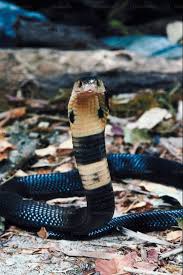
Read the facts about king cobras below :
1. The World's Longest Venomous Snake: King cobras hold the undisputed title of being the longest venomous snake species on Earth. An exceptionally large individual can reach a maximum confirmed length of up to 5.6 meters, making it a truly formidable presence in its natural habitat. This immense length is supported by hundreds of vertebrae that provide incredible flexibility and movement. Their massive size allows them to dominate their ecosystems, comfortably overpowering other reptiles. However, this slender reptilian build varies across different environments, with average specimens typically reaching 3 to 4 meters. Sadly, maintaining these extensive foraging grounds requires healthy, unfragmented forest ecosystems. As tropical habitats shrink due to human encroachment, these majestic reptiles struggle more and more to find the space and resources necessary to support their large physical frames.
2. Specialized Snake Hunters: Unlike true cobras that primarily feed on rodents, king cobras are specialized ophiophages, meaning their diet consists almost entirely of other snakes. They routinely hunt rat snakes, pythons, and even highly venomous true cobras or kraits. It is not uncommon to see a king cobra follow an odor trail through forest streams, tracking its target purely by scent. Their elongated bodies and uniquely adapted digestive systems allow them to safely break down the tissues and venom of other snakes. They can swallow massive prey items completely whole by unhinging their jaw structures. Furthermore, their bodies have a natural resistance to the deadly neurotoxins of the local snakes they hunt, turning a dangerous opponent into a safe meal. This unique reliance on other reptiles highlights how deeply connected they are to high biodiversity across Asian forest systems.
3. Potent and Massive Venom Yield: Despite not having the most toxic venom drop-for-drop, king cobras possess a massive venom delivery capacity that makes a single strike incredibly lethal. This rapid devastation is possible because a single bite can inject a massive volume of neurotoxins—up to 400 to 500 milligrams in one go. They rely on these large quantities to attack the central nervous system of their targets, causing rapid paralysis and respiratory failure. Their fixed fangs bite firmly into the flesh, acting like hypodermic needles to pump toxins directly into the victim. This toxic cocktail can incapacitate an adult elephant within a few hours or kill 20 adult humans in minutes. If a defensive bite occurs, the king cobra can easily end a confrontation with immediate effect. The combination of a massive venom payload and precise striking makes them incredibly efficient killers when cornered.
4. Iconic Hood Threat Display: The recognizable threat presentation found on a king cobra functions as a dramatic defense mechanism to ward off potential predators. When the snake feels threatened, it expands its flexible ribs and neck muscles outward to create a broad silhouette. Interestingly, this imposing hood is complemented by chevron markings or light crossbars running across its upper body. This means that when the front third of its body stands tall, the striking visual warning is impossible to ignore. The primary purpose of this behavior is to make the snake look significantly larger than it actually is to intimidate rivals. In the moving shadows of thick jungles or tall grasses, this display turns an otherwise cryptic animal into an intimidating warning sign. This evolutionary design is a masterpiece of natural posturing that helps prevent unnecessary physical conflict.
5. Emerging Genetic Species: The king cobra taxonomic group is no longer viewed as just a single, uniform snake species across its entire global footprint. In contrast to old classifications, modern genetic and morphological research has split the group into four separate species. The Northern king cobra roams across large parts of India and Southeast Asia, acting as the iconic type variety. Meanwhile, the Sunda king cobra is genetically adapted to the island chains of Indonesia, showing distinct island evolution traits. The Western Ghats king cobra holds a localized range along India's coastal mountains, while the Luzon king cobra resides strictly in the Philippines. Each of these regional species represents an independent branch of reptilian history that faces unique localized environmental threats. Protecting this newfound biodiversity requires distinct conservation laws tailored to the specific regional policies of each Asian country.
6. Unique Nest-Building Instincts: King cobras exhibit an extraordinary reproductive behavior that is completely unique among all known snake species globally. If you look closely at their nesting habits, you will find that the female actively gathers leaves and twigs to build a mound. This physical behavior uses loops of her long body to sweep forest floor debris into a multi-layered pile. When the eggs are laid safely inside, the natural decomposition of the leaves generates steady warmth to incubate them. The mother snake then coils directly on top of the nest, staying fiercely protective of her future offspring for months. Depending on the region, the male might also stay close by, assisting her in defending the territory against predators. This protective, coordinated lifestyle ensures the young survive development without being destroyed by forest scavengers.
7. Towering Defensive Stature: The defensive posturing of a king cobra is truly terrifying, particularly due to its ability to stand up vertically. Thanks to highly coordinated muscle contractions along its long frame, a king cobra can lift up to a third of its body straight up into the air. This extraordinary vertical rise allows them to look an adult human directly in the eye, standing over 1.5 meters tall. Amazingly, they can maintain this upright position while moving forward to attack an approaching threat. This standing ability is heavily utilized when cornered, helping the snake assess its surroundings and find an opening to strike. It also serves as a warning, signaling to a predator that the snake is ready to defend itself with lethal venom. The sheer height generated by their muscles ensures that very few animals will choose to challenge a standing cobra.
8. A Dog-Like Growling Hiss: The defensive sound of an adult king cobra is one of the most unusual and unsettling noises in the reptile world. Produced by a specialized respiratory tract with tracheal chambers, this deep, low-pitched sound resonates at a frequency near 600 Hz. King cobras use this booming vocalization to terrify intruders and warn off large animals like elephants. The sound waves generated are so deeply low-frequency that they sound like a growling dog rather than a typical snake hiss. This acoustic structure can surprise a human or animal walking through thick brush, causing them to immediately back away. When a king cobra growls from close proximity, the vibration can be clearly heard and felt in the immediate area. This vocal warning helps prevent physical contact, allowing the snake to protect itself without spending its valuable venom supplies.
9. Massive Fasting Capability: As cold-blooded ectotherms with low metabolic rates, king cobras possess a truly incredible fasting capacity when food is hard to find. A king cobra can swallow an entire heavy snake in one meal and then comfortably survive for months without eating again. This slow-burning digestive process is an evolutionary asset in seasonal environments, where finding other reptiles is highly unpredictable. After consuming a massive meal, the snake will find a quiet retreat under rocks or roots to rest for days while digestion occurs. They do not need to hunt continuously because their bodies store and utilize nutrients with extreme efficiency. The king cobra can even go up to a full year without food in certain conditions without losing body mass. This cycle of sporadic feasting and long-term fasting ensures they survive long resource droughts.
10. Solitary and Elusive Habits: Unlike social animals or species that share communal dens, king cobras are solitary creatures that avoid companionship. Except for the short interaction required for mating and nest defense, adult king cobras spend their lives in complete isolation. They establish broad home ranges that they travel through, using streams and riverbanks to navigate their hunting grounds. A single snake's territory is carefully explored, and they avoid crossing paths with other king cobras outside the breeding season. They stay updated on neighboring snakes by tasting the air for pheromone trails left behind on forest debris. When two adult males do happen to meet, it results in highly ritualized wrestling matches where they try to push each other down. This solitary nature means they must be highly self-reliant, as a broken jaw or injury would end their ability to hunt.
11. Masters of Persistent Tracking: King cobras are active diurnal hunters that rely on chemical tracking and patient search tactics to catch their prey. Their keen senses pick up invisible chemical signatures, allowing them to follow a target's path across forest floors. They will slowly glide through vegetation, moving with total focus until they bring their target into visual view. Once they manage to get within a strike zone, they use their rapid forward speed to catch the prey. They use their long bodies to pin struggling snakes down, preventing them from twisting around to bite back. A precise, heavy bite is then delivered to inject neurotoxins that quickly stop the prey's movement. Because this specialized hunting requires immense tracking accuracy, they rely heavily on undisturbed forest floors to find their prey.
12. Exceptional Daytime Vision: King cobras do the vast majority of their hunting during the day because their eyes are built for sharp daylight vision. Their visual visual clarity is excellent, allowing them to detect moving objects up to 100 meters away. This focus is made possible by highly developed retinas that catch subtle shifts in the surrounding forest environment. This biological design lets them spot a rat snake moving through distant branches or notice a human approaching long before danger arrives. It is also the reason why they can track rapid movements so efficiently during a defensive face-off. Hunting during daylight hours allows them to bask in the sun to regulate their body temperature while searching for food. Their vision is supported by a flickering tongue that gathers airborne molecules to complete their sensory map.
13. Fixed Hypodermic Fangs: A look inside a king cobra's mouth reveals a dangerous anatomy equipped with two fixed, hollow fangs. These rigid structures sit at the front of the upper jaw, measuring up to 1.25 centimeters in length. This design serves a vital purpose during an attack, acting like hypodermic needles to inject venom deep into tissues. By clamping down on a target, the snake forces venom through the hollow channels directly into the bloodstream of its prey. It is said that their jaw mechanics can deliver a massive dose of toxins that overwhelms an animal's nervous system instantly. Additionally, these teeth help secure slippery, moving snakes, keeping them held tight during the swallowing process. This specialized jaw structure showcases how perfectly evolved the king cobra is for its predatory lifestyle.
14. Independent Hatchling Venom: King cobra hatchlings enter the world in an independent state, being born fully armed with highly toxic venom. A typical clutch consists of 20 to 40 eggs, incubated safely inside a warm leaf mound. Because they must fend for themselves the moment they break through their eggshells, they possess active venom glands from day one. The mother cobra leaves the nest just as the eggs hatch, preventing her from accidentally eating her own young. This means the small hatchlings receive no parental care after birth and must immediately find hiding spots. Despite their small size of around 45 centimeters, their bite carries a fully concentrated dose of neurotoxins to drop small prey. By the time they reach a few weeks old, they are already actively tracking down small lizards and juvenile snakes.
15. Sophisticated Tongue Flicking: To navigate their habitats without relying on hearing, king cobras utilize a highly advanced chemical sensing system. They possess a deeply forked tongue that picks up tiny chemical particles floating in the air. By flicking this tongue out, they bring these molecules inside to a specialized sensory organ on the roof of their mouth. This system carries a precise chemical map that informs the snake of a nearby mate, a threat, or a hidden prey trail. They also use their heavy body vibrations to sense ground movements, warning them of approaching large animals. Neighboring cobras leave behind trailing pheromones that help individuals track territory distribution during breeding seasons. This chemical messaging system helps minimize surprise encounters, allowing solitary snakes to share an ecosystem safely.
16. The Truth About Juvenile Bands: Contrary to popular belief, young king cobras do not look like miniature versions of their parents, leading to frequent misidentifications. Instead, their striking jet-black bodies are covered in bright yellow or white horizontal bands. This pattern provides disruptive camouflage on dark forest floors, breaking up their shape against leaves and roots. In the wild, this color phase lasts through their early development, slowly fading away as they grow into large adults. Because a small snake is highly vulnerable to birds and mongooses, this pattern helps them hide effectively. Almost all adult king cobras lose these sharp bands, replacing them with solid olive green, brown, or uniform black skins. This color transformation marks their transition into apex predators that no longer require defensive camouflage.
17. Shying Away From Conflict: While king cobras are famous for their deadly venom and aggressive standing displays, they are actually remarkably shy, non-aggressive reptiles. Known as cautious animals, they will choose to escape and flee from human presence whenever possible. They will only rear up and flare their hoods if they are completely cornered, stepped on, or defending a nest. This behavior serves to de-escalate tension with large animals, signaling that the snake wants to be left alone. Cobras will blow air loudly as a final warning before choosing to bite, trying hard to avoid wasting their venom. In managed sanctuary settings, king cobras show a high level of intelligence and track handler movements calmly without panic. This calm nature offers a glimpse into the controlled, non-aggressive side of an otherwise feared apex predator.
18. A Unique Genus of Its Own: One of the most fascinating facts of modern reptilian taxonomy is that the king cobra is not a true cobra at all. Scientists point out that they do not belong to the *Naja* genus, which holds all typical true cobras. Instead, the king cobra sits entirely alone in its own distinct genus called *Ophiophagus*. This Latin name translates directly to "snake-eater," honoring their highly specialized diet. Many true cobras are small, generalist hunters, whereas the king cobra is an evolutionary offshoot closer to early mambas. This taxonomic separation highlights how unique their traits are, from nest building to vocal growls. This specialized heritage means they cannot be easily replaced if their evolutionary line is broken by modern extinctions.
19. Continuous Growth and Skin Shedding: The scales of a king cobra are magnificent examples of reptilian biology, designed to protect their bodies during intense snake-on-snake battles. Because their bodies grow continuously throughout their long lives, they must replace their outer layer of skin regularly. An active adult will shed its old skin roughly five times every single year to accommodate body growth. This shedding process is critical for active hunters, as it clears away old parasites and restores clarity to their transparent eye caps. Inside their jaw structures are rows of replacement teeth that slide forward if an active fang breaks during a hunt. The large scales on their head, called shields, protect their skull from the defensive bites of the snakes they consume. This regular renewal ensures their body remains perfectly tuned for a long life in rough jungle terrain.
20. Severe Extinction Threats: King cobras are currently facing an unprecedented survival crisis, with their wild populations classified as vulnerable on international red lists. The primary driver of this decline is severe habitat destruction caused by logging, farming, and expanding cities. King cobras have lost a significant percentage of their historical forest homes, forcing them into close contact with human settlements. This fragmentation leads to increased human-snake conflict, as displaced reptiles wander onto farms and plantations looking for shelter. Additionally, the constant collection of these snakes for traditional medicines, skins, and the illegal exotic pet trade thins out wild populations. Without aggressive habitat protection laws and public education to reduce killings, we face the loss of these incredible reptiles.