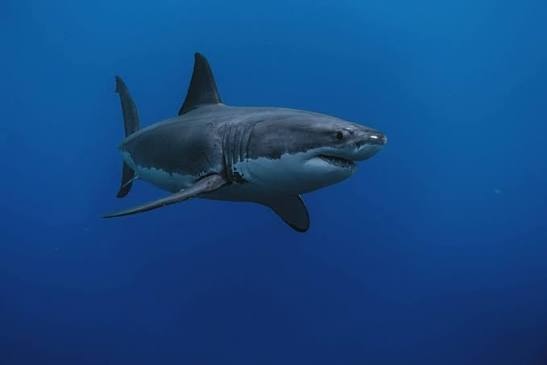
Read the facts about sharks below :
1. Cartilaginous Skeletal Structure: Sharks hold a distinct evolutionary biological trait by completely lacking true bones within their bodies. Instead, their entire skeletal framework is composed entirely of cartilage, the very same flexible tissue found in human ears and noses. This structural adaptation makes their bodies significantly lighter and much more flexible than bony fish, allowing them to make tight, high-speed turns while chasing agile marine prey. Because cartilage is much less dense than bone, it heavily reduces their overall body weight, saving vital energy during long transoceanic migrations. However, because cartilage does not fossilize well, most of what scientists know about ancient shark history comes exclusively from their hard, mineralized teeth. Sadly, this lack of a rigid rib cage means that if a shark is removed from the water, its own massive body mass can easily crush its internal organs.
2. Advanced Electroreception Sense: Unlike many terrestrial predators and even marine mammals, sharks absolutely dominate their environment using a specialized sixth sense known as electroreception. They utilize tiny, jelly-filled pores covering their snout area called the Ampullae of Lorenzini to detect the weak electrical fields generated by all living creatures. It is not uncommon to see a hammerhead shark sweeping its wide head close to the sandy ocean floor, picking up the hidden heartbeats of buried stingrays. This highly efficient sensory system functions perfectly even in pitch-black water or blinding silt, ensuring that prey cannot easily hide. They have been recorded detecting electrical changes so minuscule that they can locate a single fish hiding motionless beneath the sand. Furthermore, sharks will use this sense to navigate across vast oceans by aligning themselves with Earth's natural magnetic fields.
3. Continuous Motion Requirements: Despite their massive weight and dense muscle build, certain shark species are capable of unleashing incredible short bursts of speed during a hunt. This rapid acceleration is essential because species like the shortfin mako rely on powerful tail strokes to launch explosive charges from beneath their targets. Their streamlined, torpedo-shaped bodies minimize drag firmly, providing maximum efficiency as they propel themselves forward through the water column. However, this high-energy lifestyle requires a constant supply of oxygenated water flowing directly over their gills to sustain respiration. If these specific obligate ram ventilators stop moving forward, they will quickly suffocate and drown due to lack of water flow. The combination of dynamic swimming capabilities and sudden, terrifying speed makes them highly efficient oceanic hunters when conditions are just right.
4. Dermal Denticle Camouflage: The unique skin texture found on a shark's body functions exactly like miniature teeth because it consists of countless tiny scales called dermal denticles. These microscopic structures point backward toward the tail, heavily reducing water resistance and drag as the shark glides through the ocean. Interestingly, these distinct markings are so effective at streamlining water flow that modern engineers have copied their design to create high-tech swimsuits and airplane coatings. This means that if you rub a shark's skin from head to tail, it feels perfectly smooth, but rubbing it backward feels like rough sandpaper. The primary purpose of this structural skin design is silent swimming, which breaks up the sound vibrations of the shark moving through the water. In the silent depths of open oceans, these denticles render the massive predator completely quiet to unsuspecting prey.
5. Diverse Marine Species: The shark lineage is divided into over five hundred distinct species, each uniquely adapted to the specific environmental pressures of its marine zone. The whale shark is the largest variety, primarily roaming tropical oceans while filtering microscopic plankton through its massive mouth. In contrast, the tiny dwarf lanternshark is built for extreme deep-sea darkness, sporting bioluminescent organs to light up the freezing ocean floor. The bull shark is uniquely adapted to varying salinities, possessing specialized kidney functions ideal for navigating fresh rivers and shallow estuaries. Other recognized varieties include the bizarre hammerhead shark and the critically endangered angel shark, which blends perfectly into sandy coastal bays. Each of these species represents a critical branch of evolutionary history that faces distinct conservation challenges in the modern era.
6. Chemosensory Long-Distance Tracking: Sharks utilize a sophisticated system of olfactory communication, and their nostrils play a vital role in conveying messages about distant food sources. If you look closely at the snout of a shark, you will notice highly sensitive nasal cavities that are entirely separate from their respiratory system. These distinct scent organs serve a highly functional purpose in the ocean, allowing them to detect chemical changes diluted in millions of gallons of water. When a shark senses an oil or blood trail while cruising through the open ocean, it will swim in a distinct zig-zag pattern to track the scent. The hunting animal follows the stronger concentration of the chemical signal, allowing it to navigate directly to an injured fish miles away. Depending on the current direction, sharks understand exactly how to position themselves to approach the source without alerting the target.
7. Endless Tooth Replacement: The physical anatomy of a shark is truly astounding, particularly when it comes to their vertical and horizontal rows of razor-sharp teeth. Thanks to a highly developed conveyor-belt structure within their gums, sharks can lose and replace thousands of teeth over the course of their lives. This extraordinary replacement capability ensures they always have sharp tools ready to grip and tear prey, preventing them from going hungry due to broken teeth. Horizontally, they have multiple rows of backup teeth waiting behind the active front line, moving forward to fill any gaps instantly. This dental strategy is heavily utilized during intense feeding events, enabling them to crush hard crab shells or bite through tough marine hides effortlessly. It also serves as a critical evolutionary advantage, ensuring that their primary hunting weapons remain perfectly functional throughout their lifespan.
8. A Highly Sensitive Lateral Line: The sensory capability of an adult shark is one of the most terrifyingly efficient detection systems in the entire animal kingdom. Produced by a specialized row of fluid-filled canals running along the sides of their body, this lateral line system can detect tiny pressure changes miles away. Sharks use this booming physical sense to locate struggling fish, warn off potential competitors, and navigate around underwater obstacles in murky water. The water movements generated by an injured animal are so distinct that they contain low-frequency vibrations easily picked up by the shark's sensory pores. This mechanical sense can penetrate absolute darkness and can actually guide a shark directly to its target without using its eyes. When a fish thrashes in close proximity, the physical vibration is detected instantly by the predatory shark.
9. Efficient Metabolic Capacity: As strict carnivores with exceptionally variable energy requirements, sharks possess a truly efficient metabolic capacity when food resources are scarce. A large shark can consume an astonishing amount of nutrient-rich blubber in a single feeding event after successfully scavenging a whale carcass. This opportunistic eating behavior is an evolutionary adaptation to the unpredictable nature of hunting in vast marine environments, where success is never guaranteed. After consuming such a massive meal, a shark will often become highly efficient, slowing its digestion down to stretch resources for months. They will actively travel long distances using minimal effort, riding ocean currents to conserve energy while looking for the next meal. This cycle of feasting and fasting means a single successful hunt or scavenged carcass can sustain a shark for an extended period.
10. Solitary Oceanic Lifestyles: Unlike marine mammals like dolphins, which live in highly social family groups called pods, most sharks are strictly solitary animals that prefer to cruise alone. Except for brief encounters during mating seasons or rare aggregations around massive food sources, adult sharks spend the vast majority of their lives in isolation. They maintain expansive migratory routes that they patrol regularly to follow shifting water temperatures and abundant prey populations. A single large shark's hunting ground is typically open and fluid, overlapping with the paths of many other marine species. They avoid accidental conflicts with neighboring sharks by reading physical posturing signals and swimming away when a larger individual arrives. When two large predators do happen to cross paths, it rarely results in vicious combat, as they prefer to establish dominance through size displays.
11. Masters of Stealthy Approaching: Sharks are apex predators that rely almost entirely on supreme stealth and countershading camouflage rather than chasing down prey over miles. Their two-toned bodies blend seamlessly into the marine environment, with dark tops matching the deep ocean and light bellies matching the sunny surface. They will slowly stalk a target from beneath, moving with absolute silence through the deep blue water column without being noticed. Once they manage to get within a critical striking distance directly underneath their target, they launch an explosive upward charge. They use their immense speed to slam into the prey, breaching the water surface and incapacitating the animal instantly. A precise bite is then delivered to secure the meal and minimize the risk of being injured by struggling claws or teeth.
12. Low-Light Visual Adaptations: Sharks do a significant amount of their hunting during twilight and night hours because their eyes are highly adapted to low-light conditions. Their nocturnal vision is estimated to be incredibly sharp, giving them a massive advantage over color-blind fish in the dark. This clarity is made possible by a specialized layer of tissue behind the retina called the tapetum lucidum, much like a cat's eye. This biological structure acts like an internal mirror, reflecting light back through the cells to maximize every single photon of bioluminescence available. It is also the reason why a shark's eyes seem to glow with a spooky, mirror-like reflection when caught by underwater dive lights. Hunting in the dark allows them to use the cover of deep water shadows to approach alert seals more easily.
13. Rigid Sensory Whiskers: A look at a bottom-dwelling shark's snout reveals a fascinating biological tool covered in sensitive feelers called nasal barbels. These rigid structures give the shark an enhanced tactile awareness, closely resembling the specialized whiskers found on catfish. This design serves a vital purpose during foraging, allowing the shark to feel directly through loose gravel and mud for hidden crabs. By brushing the ocean floor repeatedly, the sensitive barbels can detect the physical movements of buried worms, ensuring nothing gets missed. It is known that a shark uses these structures to identify the exact texture of objects before biting them. Additionally, this close-range sensory setup acts as a natural guide through dark underwater caves, preventing accidental collisions with sharp rocks.
14. Independent Pup Development: Shark pups enter the world in an incredibly independent state, being born fully formed and entirely ready to fend for themselves. A typical litter varies wildly, from a few live pups to dozens of leathery egg cases called "mermaid's purses" left on the seafloor. Because they receive absolutely no parental care after birth or hatching, they rely entirely on survival instincts to navigate the dangerous shallows. The mother shark must leave them immediately, swimming away to deep water to prevent herself from accidentally eating her own young. Male sharks play absolutely no role in protecting the offspring and leave the nursery areas immediately after the mating cycle concludes. As a result, the young pups must balance hunting for small shrimp with hiding in shallow mangrove roots to avoid larger coastal predators.
15. Sophisticated Pheromone Signaling: To navigate the vastness of open oceans without constant physical interaction, sharks utilize a highly advanced system of chemical communication. They possess specialized sensory organs located along their skin that can detect trace pheromones released into passing ocean currents. Sharks will leave a trail of chemical markers as they travel through common migration corridors during the spring months. This fluid carries a distinct biological signature that informs other sharks of the individual's size, readiness to mate, and health status. They also use distinct swimming behaviors, like body arching and head shaking, to provide a permanent visual warning to other nearby predators. Neighboring sharks carefully monitor these postural signals to determine exactly how aggressive the territory owner is feeling.
16. The Truth About White Sharks: Contrary to popular belief, white sharks are not mindless killing machines, nor do they actively hunt human beings for food. Instead, their rare visual mistakes and exploratory bites are caused by a natural curiosity about unfamiliar shapes splashing on the surface. In the wild, true unprovoked attacks are incredibly rare, occurring far less frequently than accidents involving common beach activities or lightning strikes. Because humans lack the thick, calorie-rich blubber layer of seals, white sharks will typically spit out an unfamiliar target immediately after an initial test bite. Almost all white sharks studied today display complex social behaviors, utilizing subtle fin movements to avoid fighting over food. To maintain these massive bodies, they require healthy populations of marine mammals, which unfortunately brings them into occasional contact with busy coastal beaches.
17. Friendly Aggregation Behaviors: While sharks are famous for their solitary hunting trips and aggressive reputations, certain species also possess remarkably social tendencies during specific seasons. Also referred to as social schooling, this behavior is seen when hundreds of hammerhead sharks gather around deep-sea volcanic seamounts. It results in a highly organized, non-aggressive hierarchy that is used exclusively to find mates or navigate global currents safely. Sharks will cruise calmly together when swimming along underwater ridges or utilizing thermal currents to rest their muscles. It serves to reduce stress within the species, signaling that individuals are traveling peacefully without competition for local food. In marine sanctuaries, sharks will frequently gather in large numbers on the sand to rest together as a sign of safety.
18. Commercial Exploitation Crisis: One of the most heartbreaking paradoxes of modern marine conservation is that millions of sharks are killed by humans every single year. Experts estimate that over one hundred million sharks are removed from global oceans annually due to commercial fishing operations. Meanwhile, in the open ocean, countless sharks are stripped of their fins and thrown back to drown simply to satisfy the demand for luxury soups. Many of these slow-growing animals take over a decade to reproduce, making it impossible for their populations to recover from heavy exploitation. Large-scale industrial longlines also catch these predators by accident, disrupting the delicate balance of the entire marine food web. True marine conservation requires protecting open ocean habitats where these remaining wild populations can hunt and breed safely.
19. Oily Livers For Dynamic Buoyancy: The internal organs of a shark are magnificent examples of evolutionary engineering, designed perfectly to facilitate constant swimming and neutral buoyancy. The center of their body features a massive, oil-rich liver that can take up to twenty-five percent of their total body weight. This fleshy organ is packed with squalene, a lightweight oil that is less dense than ocean water, keeping the shark from sinking to the dark floor. This natural buoyancy tool is absolutely critical for an active predator that lacks the gas-filled swim bladders found in common bony fish. Inside their mouths are rows of sharp teeth that measure up to several centimeters in length when fully grown. The shark keeps these weapons perfectly exposed, ready to snap shut on passing fish while swimming effortlessly through deep underwater trenches.
20. Severe Marine Conservation Threats: Sharks are currently facing an unprecedented survival crisis, with many global populations listed as critically endangered on international red lists. The primary driver of this decline is severe overfishing caused by international trade networks and lack of marine enforcement. Sharks have lost a significant percentage of their historic populations over the past century, forcing them out of traditional coastal hunting grounds. This decline leads to increased ecosystem disruption, as smaller predatory fish multiply unchecked, ruining local commercial fisheries. Additionally, the insatiable demand for shark products fuels relentless finning networks across international waters. Every single part of the shark, from its liver oil to its cartilage, is traded for commercial profit. Without aggressive marine protection zones and strict fishing quotas, we face the very real possibility of losing these fish forever.