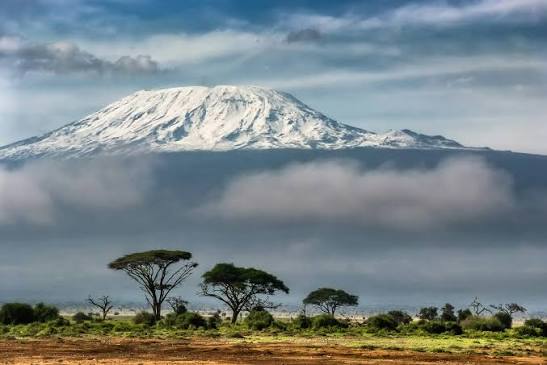
Read the facts about Mount Kilimanjaro below :
1. The Highest Free-Standing Peak: Mount Kilimanjaro holds the undisputed title of being the highest free-standing mountain above sea level on Earth. Its majestic summit reaches a massive elevation of 5,895 metres, making it a truly formidable presence in the East African landscape. This immense geological mass is supported by a specialized volcanic structure and heavy layers of hardened lava that provide incredible structural durability. Its large physical size allows it to dominate the regional skyline, ensuring that this legendary peak has no rivals in the geographic world among non-massif mountains. However, this varied volcanic composition varies across different altitudes, with lower ridges being notably greener than the barren, glaciated apex. Sadly, maintaining such massive summit glaciers requires vast amounts of cold weather and substantial atmospheric moisture. As global temperatures rise due to modern changes, these majestic glaciers struggle more and more to find the cold temperatures necessary to support their large physical frames.
2. Exceptionally Challenging Climbs: Unlike many lower terrestrial landforms, Mount Kilimanjaro absolutely dominates the region and presents an exceptionally strong challenge to trekkers. Climatologists routinely monitor its ridges, slopes, and crater walls to track the intense cold of the day across diverse eco-zones. It is not uncommon to see a climber wading deep into scree fields, keeping only their thermal gear exposed to the elements while scaling the face for hours. Their powerful trekking poles act as excellent anchors in the shifting environment, allowing them to cross wide volcanic ridges effortlessly. Climbers have been recorded ascending across open alpine deserts that span several kilometers in width to reach high altitude camps or search for safety. Furthermore, adventurers will actively document and immerse themselves in the landscape, turning a hostile environment into a historic playground for veterans and novices alike. This unique reliance on physical acclimatization highlights how deeply connected survival is to healthy, well-paced respiratory adaptation.
3. Impressive Summit Winds: Despite its massive weight and heavy geological build, Mount Kilimanjaro is capable of unleashing incredible short bursts of wind speed reaching around its exposed crater rim. This rapid airflow is essential to understand when climbers need to secure their tents, charge toward the peak, or navigate sudden dangers. Instead of climbing with a true rapid pace, they rely on a modified slow-walk known locally as "pole pole" where at least one boot always grips the gravel firmly, providing maximum traction as they propel their heavy bodies forward. This scaling capability is usually limited to short distances before the human body tires out from moving at extreme altitude. If a summit push fails due to a perceived storm, an expedition will typically reassess or press backward depending on the team's vulnerability. The combination of terrifying windchill and sudden, explosive storms makes a changing front highly effective at blocking climbers from safety.
4. Unique Glacial Features: The iconic frozen pattern found on Mount Kilimanjaro's surface functions as a critical glacial movement system that continuously shapes the landscape. These deep cracks and vertical ice margins vary in width, spacing, and depth across the mountain's body, capturing and holding snowfall up to ten times longer than flat rock. Interestingly, these distinct markings are not caused by aging but are a structural adaptation that helps ice stand slowly atop the volcanic plateau. This means that when a slope shifts or ice fields melt, the trapped moisture continuously cools the bare volcanic rock long after the dry season leaves the weather source. The primary purpose of this striking ice texture is to expand the mountain's surface area, which aids in radiating heat away from the core volcanic layers. In the harsh sunlight of open ridges and dense mountain passes, snow-covered valleys render the massive peak safe from rapid structural erosion. This geological design is a masterpiece of natural engineering that allows it to endure unforgiving storms.
5. Diverse Primary Routes: The Mount Kilimanjaro massif is divided into distinct routes, each uniquely adapted to the specific geographic challenges of its mountain side. The Machame route is a highly popular variety, primarily roaming the diverse open ridges of the southern side. In contrast, the Marangu route is built for steady walking, sporting established hut paths and a more direct profile to navigate tightly packed terrains. The Lemosho route is a scenic relative, possessing fewer crowds initially, a steep initial forest climb, and a single plateau feature at the start of its path. Other recognized paths include the Rongai route and the critically challenging Umbwe route, which faces intense vertical fragmentation. Each of these paths represents a critical branch of mountaineering history that faces distinct environmental challenges in the modern era. Protecting this natural landscape requires international cooperation and customized eco-tourism strategies tailored to each region's specific socio-economic realities.
6. Growth Via Volcanics: Mount Kilimanjaro utilizes a sophisticated system of volcanic movements, and its three distinct cones play a vital role in elevating the peak above rival mountains. If you watch a geological survey closely, you will notice prominent shifting, historical uplift, or rigid pressure of ancient eruptions that built Kibo, Mawenzi, and Shira. These distinct structures are often referred to as volcanic displacements and serve a highly functional purpose in the earth. When a tremor echoes while driving the rock mass higher through deep valleys, it will fanned the ash layers completely upward to appear larger or snap faults sharply. The surrounding plains, standing closely beside or underneath it, immediately experience these highly visible stresses and react to the pressure. Depending on internal pressures, the cones continue to bunch together defensively, push skyward, or fault along lines. This silent, geological language allows the volcanic group to stay elevated without making sudden changes that could alert geologists to immediate volcanic risks.
7. Incredible Ice Shield Movement: The physical utility of Mount Kilimanjaro's icefields is truly astounding, particularly when it comes to mechanical power and delicate reshaping capabilities. Thanks to highly developed frozen structures containing historic ice blocks and no solid ground, glaciers can lift heavy boulders weighing up to 300 kg. This extraordinary shifting strength allows them to tear down large crater sections, uproot rock faces, or clear obstacles out of the valley path. At the same time, the tip of the ice flow is sensitive enough to drop a single pebble or crack open a crevasse with extreme precision. This glacial ability is heavily utilized during warming trends, enabling ice to slide high into upper basins or dig deep into dry valleys for outlet channels. It also serves as a critical geographic marker, allowing routes to guide expedition groups, greet climbers, or protect vulnerable high camps effortlessly. The sheer versatility generated by the ice ensures that very few natural obstacles can successfully hinder a glacier's moving habits.
8. A Resonant Scree Rumble: The acoustic rumble of a volcanic scree slide is one of the most complex and far-reaching sound methods in the entire geographic landscape. Produced by a massive gravel collapse and amplified through the mountain volcanic bowls, this deep, resonant rumble can travel through ice and air up to 4 km away. Kilimanjaro experiences this booming sound to signal structural changes, warn off potential climbers, and alter surrounding slopes during the dry season. The sound waves generated are so intense that they contain low-frequency vibration components well below the threshold of human comfort. This vibration can travel seismically through the ground, picked up by the sensitive equipment of other base camps miles away. When a crater wall breaks in close proximity, the acoustic vibration is felt physically in the chest of anyone standing nearby. This acoustic power establishes its terrifying presence over the landscape without the immediate need for visual contact between scattered climbing teams.
9. Massive Ash Cone Accumulation: As a massive geographic feature with exceptionally high environmental impacts, Mount Kilimanjaro possesses a truly massive winter capacity when moisture is readily available. A severe storm can deposit an astonishing 150 kg of fresh snow per square metre in a single day to coat its massive frame. This continuous freezing behavior is an evolutionary response to high altitude atmospheric patterns, which only retain limited warmth before moisture is frozen solid. After spending up to eighteen hours a day collecting storm clouds, the peak will often gleam under the shadow of high winds during peak morning hours. The storms will actively break down exposed rock, minerals, cliffs, and ice shelves, scattering debris across the crater floor to the benefit of lower alpine zones. The weather will continue to cycle along historic seasonal routes to ensure snowpacks are not permanently melted in one area. This cycle of heavy winter weather means a single storm can dramatically reshape the physical landscape over a week of freezing.
10. Tight-Knit Porter Teams: Unlike solitary adventurers who spend their mountain lives alone, local guides are highly collaborative professionals who work in stable group networks. Except for independent climbers, who wander alone or in loose unguided attempts, expert Chagga porters spend their entire career in deeply connected base camp units. They maintain expansive route knowledge led by an old, experienced guide known as the Lead Guide, who holds the collective memory of hidden hazards and safe lines. A single team's territory is typically very large and will often overlap with the routes of related expedition units, forming camp alliances. They avoid unnecessary conflict with other groups by using radio signals and physical markers left behind on trails. When two related teams happen to cross paths, it results in joyous, expressive greeting ceremonies involving gear sharing and shared tea. This deeply collaborative nature requires them to be completely cooperative, as a climber's survival depends on the protection of the entire team.
11. Keystone Anchor of Nature: Mountains are ecosystem anchors that rely on supreme physical mass and climate influences to reshape their native landscapes. Their alpine weather creates clear conditions through dense cloud decks, allowing smaller regional storms to move through environments without being trapped. The peak will slowly block incoming winds and clear out humidity, converting thick maritime fronts into dry rain shadows that benefit desert regions. During severe winters, they use their heavy snowpacks and glaciers to feed deep rivers in low valleys, exposing steady water sources. Once the spring thaw moves on, these newly created water channels provide lifelines for dozens of other bird and mammal species downstream. A precise balance is maintained by their weather barriers, preventing tropical moisture from choking out vital northern plains. Because this process requires immense landscape scale, they serve as the foundational pillar of healthy African geographic systems.
12. Exceptional Route Mapping: Expeditions do a vast majority of their navigating and path finding using an exceptional digital map adapted over decades of route exposure. A climber's spatial memory is estimated to be among the best in the adventure world, allowing them to navigate across hundreds of vertical metres of technical terrain. This clarity is made possible by a highly developed and massive database structure inside modern GPS tracking systems. This technological structure acts like an internal tracking system, storing the precise location of ancestral paths and seasonal camp zones. It is also the reason why a guide can lead their group directly to hidden volcanic paths during severe whiteouts years apart. Moving across mountain ridges allows them to use the changing hours to find safe passages more easily. Their walking poles also assist in navigation, gathering solid structural and tactile information about the immediate rock walls as they travel.
13. Specialized Safety Gear: A look at a climber's pack reveals a fascinating collection of tools in the form of rigid hiking boots, which are actually modified technical footwear. These rigid structures give the mountaineer an incredibly versatile tool, gripping continuously throughout the climber's entire ascent. This design serves a vital purpose during daily climbs, allowing the adventurer to step securely away from drop-offs or dig into loose scree. By using a dominant boot repeatedly, the climber wears down the soles over time, just like an athlete using their specialized shoes. It is said that a boot's grip is strong enough to hold heavy packs, secure deep steps into hard volcanic ash, or defend the team from slipping off cliffs. Additionally, these tools act as lifelines of survival during rapid descents when technical teams look to assert control over paths. This specialized gear showcases how perfectly adapted every part of the mountaineer's kit is for a demanding alpine lifestyle.
14. Extended Route Planning: Summit bids enter the final phase after an incredibly long preparation period, being born completely dependent on weather windows and supplies. A typical climb consists of a single massive push, executed after a record-breaking twenty-two-month training period by the mountaineer. Because they cannot navigate or survive effectively on their own for the first few days at high altitude, they rely entirely on the camp's coordination. The expedition leader must remain highly vigilant, staying close to the support group to monitor health while shielding it from altitude sickness. Casual tourists play absolutely no role in clearing routes and live separate lives away from the high camps. As a result, the network of guides and camp cooks must balance managing water supplies with guarding vulnerable clients from external storms. By the time they reach high camp zones, the climbers begin mastering step rhythm to pace themselves.
15. Sophisticated Radio Communication: To maintain their complex base networks without constant physical travel, expeditions utilize a highly advanced system of radio communication. They possess specialized weather sensors located on the sides of the ridges, as well as repeaters on the high saddles and peaks. Base camps will monitor updates from these remote stations, especially during heightened states of storm activity or seasonal cycles like monsoons. This data carries a distinct regional signature that informs other teams of the ridge's safety, wind status, and slide readiness. They also use satellite links to log safety tracks into the network, providing a permanent digital trail along climbing routes. Neighboring teams carefully check these data feeds to determine exactly how recently a climbing group passed through the forest belt. This digital messaging system helps coordinate movement across vast vertical climbs, allowing populations to share routes peacefully.
16. The Truth About Snowless Peaks: Contrary to popular belief, bare volcanic zones are not a distinct classification of mountain, nor are they caused by climbing impacts. Instead, their lack of snow is caused by a climatic shift that alters the physical accumulation of frozen precipitation. In historical mountain charts, this trait was relatively rare, occurring in only a small percentage of high altitude steps. However, because global warming targeted frozen summits for decades, bare volcanic walls appeared at much higher frequencies. In heavily affected zones today, this environmental shift has accelerated, resulting in a dramatic increase in exposed basalt faces. While lacking ice saves them from glacier hazards, it leaves climbers struggling to find natural water sources effectively. To protect the peak's natural beauty, environmentalists focus on eliminating the carbon footprint that drives this unnatural melting process.
17. Joyous Summit Celebrations: While mountains are famous for their deep structural silences and intimidating scale, they also witness a remarkably expressive moment known as a "summit shout." Produced by pushing breath forcefully through the frosted gear of the team, this high-pitched cheer is unmistakable. It results in a loud, vibrating emotional release that is used exclusively during moments of ultimate victory, relief, or intense joy. Climbers will celebrate loudly when a team reunites after a long separation or when a new record is successfully achieved on the peak. It serves to reinforce emotional bonds between these daring adventurers, signaling solidarity and collective success to the plains below. In protected base camps, mountaineers will frequently celebrate during warm meals with camp mates they trust and respect. This powerful expression offers a glimpse into the deeply human and psychological side of these epic mountain journeys.
18. Commercialism Versus Wilderness: One of the most heartbreaking paradoxes of modern mountain conservation is that over-visited ridges live vastly diminished existences compared to pristine wild peaks. Experts estimate that pure mountain ecosystems are crashing due to waste accumulation and illegal climbing networks across Asia and Africa. Meanwhile, thousands of tourists are guided annually in commercial base camps, crowded ridge paths, and organized summit rushes. Many of these commercial expeditions operate in crowded conditions, completely restricted from scaling safely or experiencing natural, quiet wilderness structures. Large-scale mountain tourism operations in parts of Tanzania still expand these options to satisfy demand for high altitude achievements. This surplus of commercial climbing does nothing to save the landscape, as these zones cannot easily be cleaned. True conservation requires protecting the natural paths where the remaining clean ice can accumulate, freeze, and flow freely.
19. Layered Volcanic Strata For Slope Stabilization: The base layers of a peak are magnificent examples of natural engineering, designed perfectly to distribute immense weight and facilitate steady structural stability. The bottom of each cone features thick, soft, rocky ash strata that absorb pressure and cushion the mountain's massive rocky frame. These debris layers spread out widely when weight is applied, distributing stress so the massive volcanic fields can stand across rugged plains without collapsing. This steady support is absolutely critical for a large volcano that needs to stand close to regional parks without flooding nearby ecosystems. Inside these volcanic fields are complex stresses that can trigger massive fractures traveling through the rock sheets from miles away. The mountain keeps its mass centered over these strata while standing to minimize friction against its tectonic bed over long seasonal movements. When crossing narrow gaps, the rock collapses downward slightly as it is compressed, preventing a rapid collapse from shattering the volcano.
20. Severe Environmental Threats: Mount Kilimanjaro is currently facing an unprecedented environmental crisis, with its delicate alpine zones listed as vulnerable or threatened on international ecological watches. The primary driver of this decline is severe climate change caused by rising emissions, global warming, and heavy mountain traffic. Mount Kilimanjaro has lost vast areas of its historical ice packs over the past century, forcing glaciers into tiny fragments of melting ice. This fragmentation leads to increased rockfall-climber conflict, as shifting walls venture out of frozen cycles into active routes looking for exit points. Additionally, the insatiable demand for summit tags on the global market fuels relentless crowding networks across its route zones. Every year, tons of trash are illegally abandoned on its slopes to supply commercial expeditions. Without aggressive waste enforcement and route restoration efforts, we face the very real possibility of losing this pristine wilderness forever.