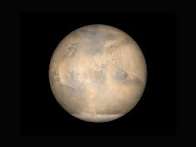
Read the facts about Venus below :
1. Earth's Evil Twin: Venus holds the undisputed title of being Earth's closest cosmic relative in terms of physical scale. It is so similar in size and mass—measuring roughly 95% of Earth's diameter—that scientists routinely refer to it as our sister planet. However, its composition presents a terrifying twist on Earth's environment. This toxic twin has evolved into a hellish wasteland, leaving researchers to puzzle over how two worlds that started with such identical building blocks could end up with such radically different destinies.
2. Scorching Greenhouse Inferno: Despite being further from the Sun than Mercury, Venus is the hottest planet in the entire solar system. The planet is completely wrapped in a dense, suffocating blanket of carbon dioxide that triggers a catastrophic, runaway greenhouse effect. This heavy atmosphere relentlessly traps thermal energy, driving surface temperatures to a uniform 462°C. This unyielding heat wave blankets the entire globe from pole to pole, day and night, making the surface hot enough to melt solid sheets of lead.
3. Retrograde Rotational Dynamics: The rotational dynamics of Venus are uniquely sluggish, completely upending our standard rules of time. The planet exhibits a retrograde rotation, meaning it spins backward on its axis compared to almost every other world in the solar system. Because it rotates at a literal crawl, a single sidereal rotation takes an astonishing 243 Earth days—which is actually longer than the 225 Earth days it takes to complete a full year. However, because of the conflicting directions of its spin and orbit, a standard solar day (sunrise to sunrise) resets every 117 Earth days.
4. Near-Perfect Circular Path: If you could somehow peer through the impenetrable clouds, you would track a highly stable sky. Because Venus's orbital path around the Sun is the least eccentric of any planet, its trajectory is almost a mathematically perfect circle. Unlike other worlds that swing dramatically closer and further from their host star throughout the year, Venus maintains a remarkably consistent distance from the Sun. This lack of orbital variation ensures that what little seasonal change could exist is entirely ironed out.
5. Solitary Celestial Status: Much like its inner neighbor Mercury, Venus lives a completely solitary existence in its orbital corridor. It possesses zero natural moons and absolutely no planetary ring structures to decorate its silhouette. Astronomers theorize that the intense gravitational dominion of the nearby Sun, combined with the planet's incredibly slow rotation, makes it dynamically impossible to keep long-term satellites in a stable orbit. Any debris from ancient impacts was likely pulled inward or stripped away entirely.
6. Crushing Poisonous Atmosphere: Standing on the surface of Venus would instantly prove fatal due to its gargantuan atmospheric profile. The planet features a massive, toxic envelope that exerts a surface pressure 92 times greater than Earth's sea level—equivalent to the crushing weights found one kilometer beneath Earth's oceans. This heavy sky consists almost entirely of carbon dioxide, topped by highly reflective clouds composed of concentrated sulfuric acid. This dense fog is so thick that it completely hides the sun from the ground.
7. Volcanic Plain Landscape: The hidden, rock-strewn surface of Venus is defined by a chaotic layout of past and present volcanic activity. Lacking water systems or traditional weather to erode geological structures, Venus has preserved over 80% of its landscape as vast, smooth plains of cooled basaltic lava. The terrain is thoroughly saturated with hundreds of thousands of volcanic vents and over 1,600 major volcanic structures. This expansive volcanic architecture suggests a world heavily shaped by internal surges of magma.
8. The Backward Spinner: While Venus travels along its path at a standard orbital velocity, its personal spin is a complete anomaly. Moving at a mere 6.5 kilometers per hour at its equator, it is the slowest spinning major planet in the solar system. This slow-motion, reverse spin is widely believed to be the result of a cataclysmic collision with a giant planetesimal during the chaotic early days of the solar system's creation, which physically flipped the planet completely upside down.
9. Solar Transit Proximity: Occupying the second orbital track from the center of our solar system, Venus cruises at an average distance of roughly 108 million kilometers from the Sun. At this middle distance, a beam of solar radiation requires approximately 6 minutes to travel across space to hit the upper cloud layers. Though it receives less raw solar energy than Mercury, its highly reflective acid clouds deflect 70% of that incoming light back into space, yet its interior remains a trap for what little light breaks through.
10. Mythological Identity: Because its thick cloud layer reflects sunlight so effectively, Venus shines with immense brilliance in Earth's night sky. Ancient civilizations noticed this dazzling display, leading the Romans to name it after Venus, their prominent goddess of love, beauty, and fertility. Because it looks like a glowing, serene jewel from afar, it became an icon of grace, contrasting sharply with the actual hellish, crushing reality that modern space probes eventually discovered beneath its clouds.
11. Scorching Acid Precipitation: Venus presents a bizarre weather paradox where its skies are filled with continuous, corrosive precipitation. The upper atmosphere features dense storm clouds that regularly produce heavy sheets of sulfuric acid rain. However, due to the extreme heat radiating from the lower atmospheric layers, this acid rain never actually touches the rocky ground. Instead, it evaporates mid-air in a process known as virga, recreating a continuous cycle of corrosive vapor.
12. Globally Resurfaced Landscape: The physical crust of Venus tells a story of an abrupt, catastrophic event that erased its ancient history. Unlike the heavily cratered surfaces of Mercury or the Moon, Venus has a remarkably low number of impact craters, all of which are evenly distributed. Geologists have deduced that roughly 300 to 500 million years ago, a massive global resurfacing event occurred. This volcanic upwelling essentially melted the outer crust and repaved the entire planet in lava, blinding us to its earliest history.
13. Terrestrial Core Architecture: Venus is explicitly categorized as a rocky terrestrial planet, matching the internal structural formats seen across Earth and Mars. Deep beneath its volcanic plains lies a three-tier interior structure consisting of a central metallic core, a thick silicate mantle, and a thin rocky crust. Because its mass and density track so closely to Earth's, scientists assume its iron-nickel core is roughly the same size, though it remains a mystery whether that core has a solidified center.
14. Super-Rotating Cloud Tops: While the solid planet of Venus turns at a agonizingly slow pace, its atmosphere behaves with terrifying speed. The middle cloud layer is caught in a state of continuous super-rotation, where high-altitude winds scream around the globe at speeds exceeding 300 kilometers per hour. These massive storms circle the entire planet once every 4 to 5 Earth days, driving immense structural friction against the lower, slower moving atmospheric columns.
15. Brilliant Sky Geometry: For observers viewing the cosmos from Earth, Venus provides an unmatched celestial show. Because its thick sulfuric acid clouds function like a giant cosmic mirror, it has an incredibly high albedo, reflecting the majority of sunlight it receives. This makes it the third brightest natural object in our sky, trailing only the Sun and Moon. It casts shadows under ideal conditions and can often be spotted with the naked eye during broad daylight.
16. Absent Internal Dynamo: One of the greatest surprises of early space exploration was the discovery that Venus lacks an internal global magnetic field. Despite having an iron-rich core and overall dimensions nearly identical to Earth's, it generates no measurable magnetic shield. Geophysicists theorize that because the planet rotates so slowly, or because its core lacks the thermal convection currents seen inside Earth, it cannot jumpstart a planetary dynamo, leaving its upper atmosphere exposed to solar wind stripping.
17. Swift Planetary Year: While a single day-night solar cycle on Venus drags onward for roughly 117 Earth days, its overall journey around the sun is relatively brisk. The planet completes a full orbital revolution in just under 225 Earth days. This creates a bizarre calendar system where an inhabitant would experience fewer than two full solar days over the span of an entire Venusian year, blending the boundaries of standard planetary time.
18. Closest Interplanetary Approach: In terms of orbital paths, Venus is the absolute closest neighbor to our home world. During its closest orbital alignment with Earth—known as inferior conjunction—Venus narrows the void between the two planets to a mere 41 million kilometers. While Mercury remains the closest average neighbor to Earth over long mathematical periods, Venus holds the record for the single closest physical approach of any major planet in our solar system.
19. Pristine Atmospheric Shield: When meteorites approach Venus, they encounter a defensive barrier unlike any other inner planet. The immense density of the carbon dioxide atmosphere acts as a hyper-velocity braking system. Smaller space rocks are instantly vaporized or crushed by the sheer air pressure before they can ever touch the ground. As a result, the planet features absolutely no small impact craters, with only large asteroids able to punch through to leave scars on the lava plains.
20. Venera Exploration Legacy: Venus stands as a monumental proving ground in the history of robotic space exploration. Because surface conditions are so incredibly hostile, early spacecraft struggled to survive for more than a few minutes before being melted and flattened. The Soviet Union's Venera program achieved historic milestones, with Venera 7 performing the first successful soft landing on another planet in 1970. Later, NASA's Magellan mission utilized advanced radar to map out the planet's hidden topography in stunning detail.