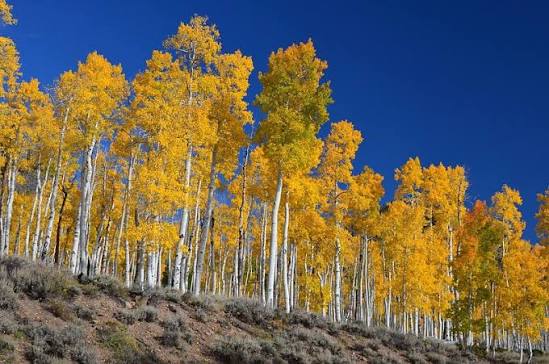
Read the facts about the Pando Tree below :
1. The World's Largest Single Organism: Pando holds the undisputed global title of being the largest living tree organism by total weight on Earth. Located in Utah's Fishlake National Forest, its collective mass ranks far higher than any other plant organism currently recorded. This immense physical scale means that the tree contains more total biological mass than can be found on several hectares of typical commercial timberland. Its interconnected root pattern ensures that it maintains a massive, unified network beneath the forest floor, creating a truly formidable presence. This massive layout makes visitors feel exceptionally small when walking through the grove. However, maintaining such a massive colony requires balanced ecosystems and specialized protection to prevent overgrazing from destroying the young shoots.
2. High Interconnected Mass: Unlike single-stem giant trees, the Pando tree focuses its massive growth into a vast underground root network with an estimated weight of 6,000 metric tonnes. In traditional mass terms, this singular plant contains enough biological material to heavily outweigh any other known living creature. The main root system alone is incredibly expansive and complex, anchoring about 47,000 distinct trunks. To help people visualize this immense plant scale, experts compare its total mass to approximately 40 to 43 adult blue whales or a massive fleet of heavy vehicles. This unique reliance on an extensive, multi-stem structure establishes it as a true natural wonder of the botanical world.
3. Deciduous Clonal Species: The Pando tree belongs to the widespread quaking aspen species, known scientifically as Populus tremuloides. This broadleaf deciduous tree features an iconic pale bark and shimmering leaves that set it apart from adjacent conifers. Quaking aspens are uniquely adapted to the distinct environmental pressures of the high-altitude regions of Utah's Colorado Plateau. Their ability to expand through root suckering historically allowed them to colonize vast landscapes efficiently following environmental disturbances. Today, this magnificent plant branch represents an important piece of global evolutionary history, heavily studied within a specialized network of public forest lands.
4. Unbelievable Plant Landmass: The impressive physical frame of the Pando tree reaches across approximately 42.8 hectares straight across the mountain basin. This massive coverage is equivalent to dozens of standard sports fields, blanketing the surrounding high-altitude landscape. While it does not rely on a single towering trunk—a distinction held by coastal redwoods—its sheer combination of weight and territory is unmatched. Its high-altitude canopy features fluttering leaves that produce a distinct whispering or trembling sound as mountain breezes blow through. This horizontal distribution ensures that the massive clone captures maximum sunlight across 106 acres to drive its daily food production.
5. Massive Stem Count: At ground level, the Pando tree features an exceptionally dense presence with a stem count measuring roughly 47,000 trunks. Its true underground root network links every single trunk together, making it wide enough that a visitor can hike for long distances while remaining entirely inside the same individual plant. This heavy underground system branches out continuously to provide maximum structural support and resource sharing for the millions of kilograms of plant matter growing above. This specialized anatomical shape ensures that the ancient clone remains firmly resilient against shifting soil conditions and heavy winter snow packs.
6. Enormous Total Weight: The calculated total weight of this living organism is believed to reach an estimated 13.2 million pounds. This makes Pando the heaviest living organism ever measured by modern science. This massive weight is supported by a sprawling, ancient root network that radiates outward to regenerate stems across a massive valley. To ensure the heavy colony does not degrade or collapse from lack of regeneration, conservationists use modern fencing to keep browsing herbivores off the sensitive ground surrounding the new shoots.
7. Ancient Living Lifespan: A historical look at Pando reveals an incredible biological lifespan estimated between 9,000 and 14,000 years old. This means the giant clonal system originally emerged from a single seed well before the dawn of human recorded history. It has successfully survived millennia of changing climates, major ice ages, and historical droughts that claimed less adaptable vegetation. This remarkable longevity highlights how perfectly adapted the species' natural cloning biology is for surviving across thousands of years.
8. Continuous Outward Expansion: Despite its ancient age, Pando is completely alive and continues to attempt to add new stems every single year. Each year, its active root network sends out underground shoots known as suckers that emerge from the soil to grow into new mature stems. This continuous growth behavior proves that clonal colonies do not stop developing as they grow older, provided they have access to water, sun, and protection from browsing animals. This cycle of vegetative production ensures that it maintains its global footprint over other plant specimens over time.
9. Native Utah Distribution: Pando is found in a highly specific geographic region, natively situated high on the Colorado Plateau in Sevier County, Utah. This grove is located within the Fishlake National Forest, sitting at an elevation of roughly 9,000 feet above sea level. The tree thrives in this specific zone due to the unique combination of cool mountain climates, rich soil, and historical geographic isolation. Unlike hidden natural record-holders, its precise geographic location is open to the public, allowing millions of visitors to travel the forest roads and view its vast canopy up close.
10. Notable Stand Decline: In recent decades, Pando has experienced a dramatic structural event via a slow, measurable decline in its younger stem population. Aerial photography and ecological monitoring show that older trunks are dying off without a sufficient number of young shoots successfully maturing to take their place. While this structural loss threatens the long-term survival of the clone, it does not change its official status as the world's heaviest tree, since the massive root network remains intact underground. This event highlighted that even the most massive living plants face severe modern ecological pressures as ecosystems become unbalanced.
11. Interconnected Resource Sharing: The primary secret behind Pando's multi-millennial survival is its highly unique, interconnected root network, which allows the clone to share water and nutrients. This underground highway system acts as a highly effective survival shield, allowing trunks on moist slopes to sustain stems located in drier patches of soil. When an environmental stressor impacts one section of the grove, the shared resources help the affected area recover without dying off completely. This evolutionary design ensures that the entire colony survives localized natural threats that routinely wipe out un-connected plant species.
12. Clonal Vegetative Reproduction: Quaking aspens like Pando rely heavily on vegetative cloning to complete their lifecycle and expand their boundaries. The organism grows a vast underground root structure that pushes up thousands of genetically identical shoots rather than prioritizing sexual reproduction through seeds. When a parent stem grows old and dies, the root system uses the available light to spur rapid new growth in the immediate vicinity. This self-replicating design gives the new trunks a strong head start, as they draw immediate nourishment from the massive pre-existing root network.
13. Photosynthetic Bark Layer: Inside the outer skin of each stem sits a specialized, living bark layer packed with chlorophyll, which provides unique metabolic support. This internal bark structure is capable of performing photosynthesis even during the winter months after the tree has dropped its leaves. This physiological engineering ensures that the tree can continue to produce energy and survive harsh mountain winters when other deciduous plants are completely dormant. This specialized energy defense system allows the plant frame to sustain its massive underground root system for thousands of years without starving.
14. Historic Scientific Discovery: The massive tree colony has a colorful historical background regarding its identity, having been formally identified through genetic mapping by modern researchers. It was first recognized as a single distinct organism in the 1970s by scientist Jerry Kemperman and later verified via comprehensive DNA sampling by geneticist Karen Mock. In 1992, researcher Michael Grant officially coined the name "Pando" to describe the single male clone. After genetic testing confirmed its incredible boundaries, the global scientific community officially established its record as the planet's heaviest organism.
15. Herbivore Exclosure Protection: Because Pando attracts significant ecological and tourist interest, forestry managers must take aggressive measures to protect the grove from herbivore impact. Large fencing structures now encircle several sections of the tree to prevent browsing animals from eating the tender new growth. Quaking aspens rely on these young shoots to replace dying mature trunks over time. If thousands of deer and cattle step into the grove and consume every single new shoot, the regeneration cycle halts, threatening the long-term survival of the entire ancient organism.
16. Modern Conservation Intervention: In recent years, Pando has faced an unprecedented survival crisis due to the suppression of natural apex predators like wolves and cougars. To protect the world's heaviest tree from overabundant mule deer populations, the Western Aspen Alliance and the US Forest Service took the extraordinary step of installing massive deer-proof fences. This physical protective barrier successfully keeps herbivores out of vulnerable sections, ensuring that young green shoots can finally mature into tall trunks completely unharmed.
17. Natural Photoautotrophic Network: As a member of the plant kingdom, Pando does not hunt or forage for organic food like animals. Instead, it relies on a photoautotrophic diet, utilizing its collective canopy of millions of leaves to absorb sunlight and convert carbon dioxide into sugars. Its vast roots draw thousands of liters of groundwater across 106 acres to support this continuous chemical synthesis. This self-sustaining system allows the massive plant colony to build millions of kilograms of wood purely out of water, air, and light over thousands of years.
18. Synchronized Autumn Transformation: While Pando appears to be a standard forest at first glance, it shares a beautiful, synchronized behavior that reveals its single identity. In the autumn, because every single stem is genetically identical, the entire 106-acre canopy shifts colors at the exact same time. The leaves turn from a vibrant summer green to a breathtaking, uniform golden-yellow all at once, creating a stunning visual phenomenon. This seasonal event offers a stark reminder of the sheer scale and genetic unity that flora can achieve under ideal preservation conditions.
19. Historical Lost Ecosystems: Although Pando is the largest clonal colony currently verified by genetic testing, historical records suggest that massive aspen systems were once much more common across North America before modern fragmentation. Human development, road construction, and agricultural expansion have cut ancient root networks apart over the past two centuries. This disruption divides large, unified organisms into smaller, isolated stands that are far more vulnerable to disease and climate shifts. These lost connections highlight how critical modern national forests are for preserving the remaining giants.
20. Shifting Climate Threats: Despite its ancient resilience, Pando faces an uncertain future due to shifting global climate patterns and prolonged regional droughts. Rising temperatures on the Colorado Plateau lead to decreased winter snowpacks, reducing the vital groundwater supply that aspens rely on during hot summer months. Furthermore, decades of predator elimination have caused an unnatural buildup of foraging deer, creating intense pressures that prevent natural forest replacement. Protecting Pando requires active forest management, including controlled fencing and wildlife management, to ensure the living wonder continues expanding for centuries to come.