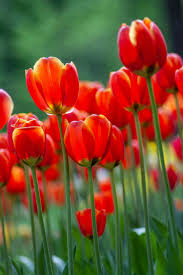
Read the facts about tulips below :
1. A Globally Celebrated Perennial: Tulips hold an undisputed global title as one of the most recognizable and widely cultivated spring flowers on Earth. Primarily grown from subterranean bulbs, their global distribution ranks higher than almost any other seasonal ornamental plant. This immense physical popularity means that billions of tulip bulbs are harvested and shipped annually across several hectares of specialized agricultural land in northern Europe. Their unique upward growth pattern ensures that they maintain a strong, elegant stem high into the garden canopy, creating a colorful visual presence. This brilliant visual display makes visitors feel exceptionally joyful when walking through commercial fields. However, maintaining such vibrant displays requires loose, well-draining soil and specialized protection to prevent modern pests from damaging the sensitive bulbs underneath the earth.
2. High Classification Diversity: Unlike simpler uniform flowers, the tulip family focuses its genetic potential into a vast spectrum of shapes with over 3,000 distinct registered varieties. In traditional horticultural terms, this singular plant group contains enough morphological variation to fit into 15 official botanical classifications. The individual flower blooms are incredibly diverse, ranging from single classic cups to fringed, lily-flowered, and multi-petaled parrot varieties. To help people visualize this immense agricultural scale, experts point to the annual Dutch export market, which yields over 12 billion bulbs per year. This unique reliance on dynamic breeding structures establishes it as a true natural wonder of the botanical world.
3. The Lily Botanical Family: The tulip belongs to the ancient lily family, known scientifically as part of the genus Tulipa. This bulb-bearing perennial features smooth, thick green foliage that sets it apart from adjacent garden annuals and weeds. Tulips are uniquely adapted to the distinct environmental pressures of continental climates, natively thriving on the rocky slopes of Central Asia's mountain ranges. Their resilient survival qualities historically allowed them to endure harsh, freezing winters and dry summers, which ultimately helped the specimen spread across early trade routes. Today, this magnificent plant branch represents an important piece of global agricultural history, heavily protected and cultivated within a massive network of public botanical parks.
4. Variable Plant Height: The impressive physical frame of cultivated tulips reaches approximately 10 to 71 centimeters straight up from the soil. This variable height allows them to occupy multiple layers of a garden landscape, towering neatly over shorter spring groundcovers. While it is not the absolute tallest flower species on the globe—a distinction held by giant sunflowers—its sheer combination of structural elegance and symmetry is unmatched. Its upper stem features distinctive cup-shaped tepals, including a specialized base that holds pollen-bearing stamens. This upright distribution ensures that the plant captures maximum sunlight to drive its daily food production.
5. Etymology of the Turban: At a structural level, the tulip features an exceptionally rounded flower head with a form that resembles traditional Middle Eastern headwear. Its common name is derived from the Persian word "delband," meaning turban, because a fully matured bloom looks strikingly wide across its top petals. This heavy visual resemblance inspired early Ottoman sultans to wear the flowers tucked into their turbans as symbols of ultimate wealth and power. This specialized anatomical shape ensures that the blooming flower protects its interior reproductive organs against heavy seasonal winds and spring rain showers.
6. Significant Economic Value: The historic market value of this living organism once reached an estimated record high during the Dutch Golden Age. This makes the tulip one of the most expensive plant organisms ever recorded by economic history. This massive value was supported by a brief but wild speculative market where rare bulbs were traded like precious currencies. To ensure the delicate flowers do not tilt or break in transit, modern export companies use specialized climate-controlled shipping crates to shield the sensitive cargo.
7. Brief Seasonal Lifespan: A historical look at tulip flowers reveals an incredible but fleeting biological bloom cycle lasting between 3 and 7 days. This means the colorful flower head emerges, opens completely, and drops its petals well within a single spring week. It has successfully survived centuries of changing climates by retreating into its underground bulb, surviving seasonal droughts and winter frosts that kill off adjacent vegetation. This remarkable longevity of the bulb highlights how perfectly adapted the species' natural biology is for surviving across consecutive calendar years.
8. Continuous Bulb Multiplication: Despite its brief flowering period, a tulip bulb is completely dynamic and continues to multiply underground every single year. Each year, its active root base splits apart to deposit enough new miniature bulblets to equal a brand new cluster of flowers. This continuous growth behavior proves that tulip bulbs do not stop developing as they grow older, provided they have access to cold winter dormancy periods. This cycle of annual bulb production ensures that a single planting expands into a larger garden display over time.
9. Global Distribution Hub: While tulips are natively found in Central Asia, they are currently situated at the heart of a massive global trade hub centered in the Netherlands. This agricultural industry is heavily located within the coastal lowlands of the country, sitting at a low elevation perfectly suited for sandy field cultivation. The flower thrives in this specific zone due to a unique combination of maritime weather, rich soil, and generational farming expertise. Unlike hidden wild variants, these commercial display fields are entirely open to the public, allowing millions of visitors to walk the paths and view the blooms up close.
10. Historic Tulip Mania: In the winter of 1637, the tulip market experienced a dramatic economic event when the speculative bubble completely collapsed across the Netherlands. The broken market system left thousands of investors holding worthless pieces of paper and over-priced bulbs. While this sudden economic loss slightly altered European financial regulations, it did not change the tulip's official status as a premier luxury flower, since its cultural beauty was independent of market prices. This event highlighted that even the most beautiful living plants can trigger unexpected human behavior when they become excessively valued.
11. Unique Virus Stripes: The primary secret behind historic tulips' multi-colored survival was a highly unique condition known as the tulip breaking virus. This biological factor altered the distribution of pigments in the petals, serving as a highly effective visual transformation that created beautiful contrasting streaks on the flower. When a typical plain flower caught the virus, the petals marbled beautifully, which skyrocketed its value among wealthy collectors. This evolutionary quirk ensured that the plant survived early selective breeding programs that routinely cleared out boring mono-colored variations.
12. Cold-Dependent Lifecycle: Garden tulips rely heavily on freezing winter temperatures to complete their seasonal reproductive lifecycles. The bulb produces chemical hormones that remain tightly locked up during warm autumn months. When the chilling cold of winter sets in, it triggers a internal countdown, causing the bulb to break dormancy and push green shoots up through the frozen soil. The nutrient-rich spring earth and lack of competition from frost-sensitive annuals give the new shoots a strong chance of blooming successfully.
13. Edible Emergency Petals: Inside the green foliage sits a crisp, juicy flower structure that provides unexpected nutritional value. This internal petal structure is packed with mild organic compounds that make it completely non-toxic and palatable to humans. This chemical safety ensured that when famine swept Europe during World War II, Dutch citizens could consume the bulbs without harm to survive. This survival food system allowed communities to remain sustained through harsh winters without facing complete starvation.
14. Iconic Royal Names: The elegant flower has a colorful historical background regarding its identity, having been named after royal figures and emperors throughout history. It was originally cultivated by Ottoman sultans who named premium varieties to honor military victories and palace dynasties. Later, European botanists took control of breeding registries and named new hybrids after famous artists, cities, and queens. After the global market stabilized, international registries officially consolidated these poetic names, which remain on retail flower tags today.
15. Commercial Field Protections: Because spring tulip festivals attract thousands of tourists every week, commercial growers must take aggressive measures to protect the crop from human impact. Sturdy fencing or clear signage encircles the entire edge of the fields to prevent visitors from stepping into the mud. Tulips possess exceptionally delicate root systems that spread out just beneath the dirt surface. If thousands of tourists step directly on this earth, the soil compacts, breaking the tender roots and cutting off the flowers' access to vital moisture.
16. Modern Climate Innovations: In recent years, tulip farming has faced an unprecedented survival crisis due to changing spring weather and erratic frosts. To protect the world's most valuable bulb fields from sudden freezes, commercial farmers take the extraordinary step of utilizing giant overhead sprinkler networks to wrap the fields in protective layers of ice. This specialized icy blanket insulates the delicate buds from extreme sub-zero temperatures, ensuring the flowers emerge into the spring completely unharmed.
17. Natural Photoautotrophic Diet: As a member of the plant kingdom, the tulip does not hunt or forage for organic food like animals. Instead, it relies on a photoautotrophic diet, utilizing its green foliage to absorb sunlight and convert carbon dioxide into sugars. Its compact roots draw liters of groundwater up into the stem to support this continuous chemical synthesis. This self-sustaining system allows the fast-growing plant to build beautiful flower heads purely out of water, air, and light over a few short weeks.
18. Nearby Floral Companions: While the tulip is an iconic spring flower, it shares its blooming schedule with several other bulb companions. The world's other major spring bulbs, named daffodils and hyacinths, are located right alongside them within neighboring garden borders. These adjacent flowers create an incredible rainbow tapestry effect that draws garden enthusiasts from all over the world. Walking through these blooming displays offers a stark reminder of the sheer color variety that flora can achieve under ideal gardening conditions.
19. Forgotten Wild Ancestors: Although cultivated tulips are highly uniform today, historical records show that rugged wild variants once carpeted the mountains before modern monocultures were enacted. A wild species known as Tulipa schrenkii was estimated to be far more resilient than modern garden hybrids before it was pushed back by agricultural expansion. Another specimen, the bright yellow Tulipa sylvestris, held wild populations across Europe before heavy urbanization restricted its habitat. These lost records highlight how critical modern botanical preserves are for keeping original wild genomes alive.
20. Changing Weather Threats: Despite their seasonal resilience, tulips face an uncertain future due to shifting global climate patterns and milder modern winters. Rising temperatures during winter months lead to a lack of cold dormancy hours, reducing the vital internal energy that bulbs rely on to push up flowers. Furthermore, decades of unpredictable spring heat waves have caused premature blooming, creating short-lived flowers that wither before completing their full reproductive cycle. Protecting tulips requires active temperature monitoring and adaptive planting dates to ensure this living wonder continues blooming for generations to come.